Article
How Much Does It Cost to Start a Chiropractic Practice—and What Can Owners Earn?

Opening your own chiropractic practice is one of the most significant decisions you'll make in your career. You get to build something that reflects your values, serve patients on your own terms, and create the kind of environment you've always envisioned. The financial side can feel daunting, though.
From securing a lease to purchasing equipment, choosing software, and hiring staff, the early choices you make will shape everything that follows. Whether you're actively preparing to launch or just starting to explore the possibility, understanding the real costs upfront will help you plan with confidence.
Calculate Your Personalized Startup Costs
Before we dive into the details, try our interactive calculator. Enter your location, practice type, and planned square footage to get a realistic estimate of what opening your practice will cost.
The numbers below represent national averages, but our calculator will give you a more accurate picture based on your specific situation.
What You Can Expect to Spend
Startup costs for chiropractic practices typically range from $33,500 to $141,000 for initial setup, with first-year operational expenses adding another $72,000 to $144,000. Add recommended cash reserves of three to six months, and you're looking at a total first-year investment of $123,500 to $357,000.
These ranges reflect real differences in practice models. A small cash-based practice in a suburban area will land on the lower end. An insurance-based practice in an urban medical complex with multiple treatment rooms and X-ray capabilities will push toward the higher end.
Breaking Down the Major Expenses
Regional Cost Variations
The figures below are general estimates. Your actual costs may vary based on ZIP code, practice size, and services offered.
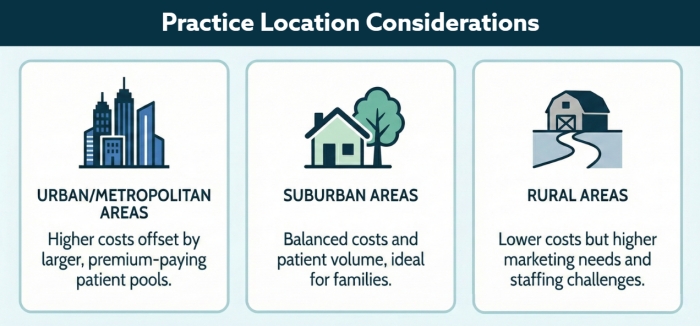
Where you open your practice significantly impacts your costs. Here's what to expect across different settings:
Urban/metropolitan areas: Higher lease costs, competitive wages for staff, more expensive marketing to stand out. You'll likely be on the higher end of every category in the table above. However, urban areas often have larger patient pools and higher household incomes, which can support premium pricing.
Suburban areas: Middle-ground costs across most categories. Good balance of patient volume and overhead expenses. Many successful practices thrive in suburban markets with strong family demographics and community engagement opportunities.
Rural areas: Lower lease costs and less competition. However, marketing budgets may need to be higher to reach dispersed populations, and hiring qualified staff can be more challenging. Patient volume may take longer to build, requiring more substantial cash reserves despite lower monthly expenses.
Lease Deposit and Build-Out: $10,000–$50,000
Your location sets the tone for everything. Security deposits typically run two to three months' rent, and build-out costs depend on the condition of the space you're leasing.
A turnkey medical suite might need minimal renovation—fresh paint, signage, or minor updates. Taking on raw commercial space means building treatment rooms from scratch, installing proper lighting and HVAC, creating a reception area, and ensuring ADA compliance.
Consider:
- Urban markets and medical complexes command premium pricing.
- Suburban strip centers and standalone buildings offer more flexibility.
- If you're keeping costs down, look for spaces previously occupied by healthcare providers where the infrastructure is already there.

Equipment and Furnishings: $15,000–$60,000
This is where your clinical vision takes shape. At minimum, you need chiropractic adjustment tables, exam stools, a front desk setup, waiting room seating, and basic office furniture.
A basic setup with one treatment room and essential furniture lands around $15,000 to $25,000. Adding a second treatment room, higher-end tables, X-ray equipment, and diagnostic tools pushes you toward $60,000.
Consider:
- Many new practitioners start with quality used equipment. A well-maintained adjusting table works just as well as a new one and saves thousands.
- Save the premium purchases for items your patients interact with directly—comfortable waiting room chairs and a professional reception area make a strong first impression.

Legal, Licensing, and Insurance: $3,000–$10,000
Business formation, state licensing, malpractice insurance, general liability coverage, and initial legal consultations fall into this category. Requirements vary significantly by state, so research your specific location early.
Malpractice insurance for a new practitioner typically runs $3,000 to $5,000 annually. General liability adds another $500 to $1,500. Legal fees for contract review, lease negotiation, and business formation can range from $1,500 to $4,000, depending on complexity.
Consider: This is an area where cutting corners creates risk. Work with an attorney who understands healthcare practices and a broker who specializes in chiropractic coverage.

Software and Technology: $2,500–$6,000
Your practice management system is your operational backbone. This category includes your EHR, scheduling tools, billing software, and the hardware to run it—computers, tablets, printers, and networking equipment.
Consider:
- Choosing software that actually works the way chiropractors practice can save you hours every week. ChiroTouch offers cloud-based solutions built specifically for chiropractic workflows, with straightforward pricing that includes SOAP note documentation, scheduling, and billing.
- Because it's designed for DCs, you avoid the learning curve and workarounds required by generic medical software.
- Setup costs typically include software licensing, hardware purchases, and any initial training.
- Monthly subscription fees fall under operational expenses.
Marketing and Branding: $3,000–$15,000
Your initial marketing budget covers logo design, business cards, exterior signage, website development, and any grand opening promotions or local advertising.
A DIY approach with template-based websites and basic signage keeps costs around $3,000 to $5,000. Hiring a healthcare marketing agency for branding, professional website design, SEO setup, and a coordinated launch campaign runs $10,000 to $15,000.
Consider:
- Most successful new practices take a middle path—professional logo and website design ($4,000 to $7,000), quality exterior signage ($1,500 to $3,000), and targeted local marketing through community events and strategic partnerships.
- Your website is your 24/7 front desk. Patients research online before calling.

First-Year Operational Expenses: $72,000–$144,000
Once you open, monthly costs start immediately, whether you have five patients or fifty. The average new practice spends $6,000 to $12,000 monthly on rent and utilities, staff salaries, software subscriptions, supplies, insurance premiums, ongoing marketing, and merchant processing fees.
These expenses directly affect how much a chiropractor can take home from an own practice. A practice may generate healthy revenue while paying its owner modestly during the first year if rent, payroll, loan payments, marketing, or other startup obligations remain high. When preparing financial projections, calculate practice revenue, business profit, and owner compensation separately.
Consider: Your burn rate—how fast you spend cash each month—determines how long your reserves need to last. Calculate this number carefully. It's better to overestimate expenses and underestimate early revenue.
Cash Reserves: $18,000–$72,000
This is your safety net while you build patient volume. Most financial advisors recommend three to six months of operating expenses in reserve.
Three months ($18,000 at the low end) is the absolute minimum. Six months ($72,000 at the high end) provides real breathing room. The timeline to profitability varies, but most new practices take six to twelve months to reach consistent positive cash flow.
Consider: Undercapitalization is one of the most common reasons new practices struggle. If you're choosing between better equipment and larger reserves, choose reserves. You can upgrade equipment later. Running out of cash closes practices.
Financing Your Practice: Real Options
Most new chiropractors don't have $150,000 to $300,000 in cash. Here's how practitioners typically fund their startup:
SBA loans: Small Business Administration loans, particularly the SBA 7(a) program, are designed for small business startups. They offer favorable terms and lower down payments than conventional loans. Expect to provide a solid business plan and financial projections.
Equipment financing: Many equipment vendors and third-party lenders offer financing specifically for chiropractic tables, X-ray equipment, and technology. You'll pay interest, but you preserve cash for operating expenses.
Practice lines of credit: A business line of credit provides flexible access to funds for operational expenses during your growth phase. You only pay interest on what you draw.
Personal investment: Many practitioners use personal savings for a portion of startup costs, then finance the rest. This shows lenders you have skin in the game.
Partnerships or associates: Some new graduates start as associates in established practices, then buy in or spin off their own location once they've built capital and experience.
Whatever combination you choose, avoid maxing out credit cards or taking on high-interest personal loans. The stress of expensive debt undermines your ability to focus on patient care and practice growth.

How Much Does a Chiropractor Make Owning Their Own Practice?
A chiropractor who owns a practice does not necessarily receive a fixed salary. Owner income depends on how much revenue the practice actually collects, how much it spends to operate, its debt obligations, and how much money must remain in the business for taxes, reserves, and future growth.
The U.S. Bureau of Labor Statistics reports that the median annual wage for chiropractors was $79,200 in May 2025. However, BLS wage data do not include self-employed chiropractors or owners and partners of unincorporated businesses. BLS also notes that chiropractors tend to earn more as they build a client base and become owners of, or partners in, a practice. For that reason, the national median is useful as an employment benchmark, but it should not be treated as a guaranteed salary for a chiropractic practice owner. See the latest BLS chiropractor wage data.
To estimate potential owner compensation, begin with collected revenue rather than billed charges. Subtract recurring expenses such as rent, payroll, software, supplies, insurance, marketing, merchant fees, and loan payments. The remaining profit must then support taxes, cash reserves, reinvestment, and any salary, draw, or distribution paid to the owner. Because compensation and tax treatment depend on the practice’s business structure, review the plan with a qualified accountant.
After opening, use chiropractic practice performance reports for tracking revenue and collections to monitor collections, payments, appointments, and other measures that influence owner income. It is also important to identify billing, denial, technology, and inventory problems that can quietly reduce practice profitability.
Your Next Steps
If you're ready to get started, here's what to do this week:
- Complete the startup cost calculator above with your actual location and practice specifications. Save your results.
- Research three to five potential locations in your target area. Get actual rental rates and build-out estimates.
- Talk to other chiropractors who opened practices in the last two years. Ask what they wish they'd known and where they'd adjust their spending.
- Schedule a conversation with ChiroTouch. Learn how Core or Advanced fits your specific practice model and budget. Ask about new practice pricing and support.
- Meet with a lender. Even if you're six months from opening, start the conversation. Understand what documentation they'll need and what terms you can expect.
Opening your own practice is absolutely achievable. It requires planning, honest assessment of your finances, and the right partners supporting you from day one.
Ready to Take the First Step?
If you’re thinking about starting your own practice, we’d love to help. Our team has helped hundreds of new chiropractors launch successfully. We understand the financial pressures you're facing, and we've built our software to scale with your practice.
Talk to a ChiroTouch specialist. Because every great practice starts with a solid plan and the right partner by your side.
Calculate Your Personalized Startup Costs
Discover what it costs to start a chiropractic practice. Use our calculator to estimate expenses and plan your first year with confidence.
FAQs
What costs are included in the Chiropractic Practice Startup Calculator?
How accurate is this startup cost estimate for opening a chiropractic practice?
Is chiropractic practice revenue the same as the owner’s salary?
What’s the typical cost range to start a chiropractic practice?
How much does a chiropractor make owning their own practice?
https://www.bls.gov/ooh/healthcare/chiropractors.htm

Trusted chiropractic experts rooted in innovation and growth, driven by unmatched chiropractic software expertise.
Designed for chiropractic practices
ChiroTouch was intentionally designed specifically for cash and insurance billing practices like yours.